New bus network eco-friendly and friendly to your wallet too
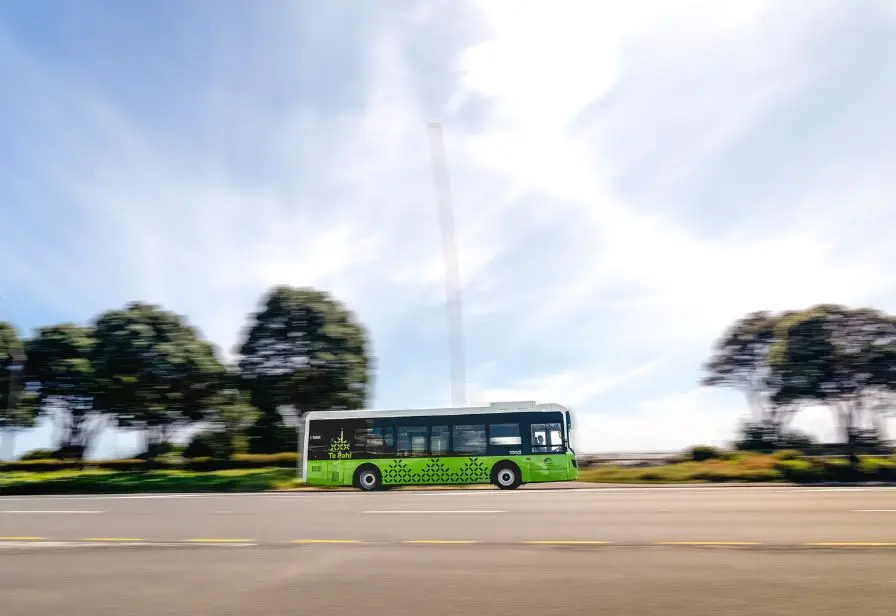
The network launches on 7 April, bringing the region’s public bus services together under the Te Pahi brand.
The New Plymouth urban fleet will feature 11 brand new electric buses, a long-planned but timely switch from diesel power given the hike in fuel prices caused by the Iran conflict.
Council Transport Engagement Manager Cheryl Gazley has encouraged drivers being hit in the pocket by the rise in petrol prices as well as those wanting to do their bit to mitigate the impact of climate change to give buses a go.
“There has never been a better time to ditch the car and get on the bus, especially as we’re about to launch an improved and streamlined network that will be super easy to use,” says Ms Gazley.
“The e-bus fleet is set to save around 560 litres of diesel each weekday – that's about 1.51 tonnes of CO2 – and they are a huge step towards helping us achieve our goal of having a zero-emission public transport network by 2035.
“With the recent hike in fuel prices, as well as being an eco-friendly form of transport for commuters, shoppers and whānau, switching to the bus is friendly to your wallets too!”
While the Council had noticed a small lift in patronage, there was still manageable capacity.
The new e-buses will join an electric bus which has been operating since March 2025 and the reductions in CO2 with the shift away from diesel will remove the equivalent of 85 cars off the road each year.
In the long-term, CO2 and other emissions such as nitrogen oxide will be tracked to check what additional improvements are being made to air quality and noise pollution from the bus fleet.
Colin Shotter, Tranzit Coachlines Taranaki Manager, says the new electric buses represent a further step in Tranzit’s commitment to reducing emissions across its fleet and operating footprint, while acknowledging the leadership shown by the Council in investing in electric vehicle technology.
“As a New Zealand family-owned business, Tranzit is proud to continue its partnership with Taranaki Regional Council in delivering public transport services for the region. The Council’s foresight in investing in electric buses is particularly significant given current economic pressures and rising fuel costs, and it demonstrates a long‑term commitment to more sustainable and cost‑effective transport for the Taranaki community,” says Mr Shotter.
“Having introduced electric bus technology in other parts of regional New Zealand, our team has been able to select charging infrastructure, vehicles and battery systems that are well suited to Taranaki’s roads, while prioritising passenger and driver comfort.
“Our drivers are genuinely proud to be behind the wheel of these buses, and our team is excited to deliver a quieter, smoother journey experience for the Taranaki community, reflecting the strong pride locals have in their public transport network.”
Ms Gazley said at just $2.50 per journey for adults (with a Bee Card) within the New Plymouth district (from Waitara to Oākura) or $6.25 (with Bee Card) from Hāwera to New Plymouth, hopping on a bus is a cost-effective alternative to private cars. There are also no additional costs for parking when heading into New Plymouth.
The new bus network provides more direct and streamlined urban services, new Saturday regional services and a new city Saturday Orbiter. There will also be a modern, user-friendly website – tepahi.govt.nz - featuring live tracking and a Journey Planner to help make bus travel simpler and more accessible.
For more details on routes, timetables and how to get a Bee Card go to tepahi.govt.nz.
E-buses fast facts
- There are 11 new e-buses, owned and operated by Tranzit Group and made by Chinese firm CRRC
- They all have USB ports, so passengers can charge their devices while travelling
- The buses are air conditioned for a comfortable ride
- They feature large front and rear doors help with a roomy bus feel
- The vehicles have bike racks meaning passengers have greater access to cycle ways in the region
- There are two wheelchair bays on each vehicle with an easy access ramp on and off that the driver will assist with.